Rust Electrical
31 components — power sources, logic gates, sensors, and automated systems.
Power Sources
Generate electricity from the environment. Connect to batteries or directly to your circuit.
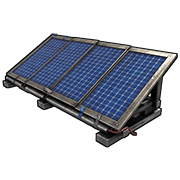
Solar Panel
Converts sunlight into electrical power, providing up to 20W at optimal angle. Output varies based on the panel's orientation relative to the sun and time of day.
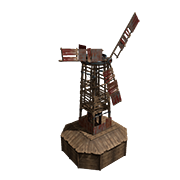
Wind Turbine
A large wind-powered generator that produces up to 149W of electricity. Output varies with wind speed and is reduced when placed near structures or terrain.

Small Generator
A portable fuel-powered generator that outputs a steady 40W. Requires Low Grade Fuel to operate, consuming approximately 1 LGF every 45 seconds.
Storage (Batteries)
Store excess power and release it when generation drops. Essential for overnight operation.
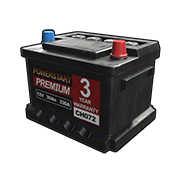
Small Rechargeable Battery
A small battery that stores electrical energy and can output up to 100W. Charges from any power source and discharges to power connected components when the primary source fails.
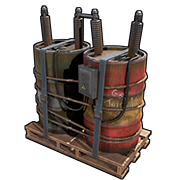
Medium Rechargeable Battery
A mid-sized rechargeable battery with greater energy capacity than the small battery. Outputs up to 100W and provides a longer backup window for your base electrical systems.
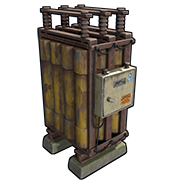
Large Rechargeable Battery
The largest battery available, storing significant electrical energy and outputting up to 100W. Ideal for bases that rely on wind turbines or solar panels with intermittent output.
Logic Gates & Switches
Control when and how power flows through your circuit. Gates, timers, counters, and switches.

Switch
A simple manual toggle switch that passes or blocks power on demand. Clicking it in-game or activating it via wire toggles the electrical flow to all connected outputs.

Timer
Automatically sends a timed power pulse to connected outputs. Configure the on-time and off-time intervals to automate lights, traps, or alert systems.
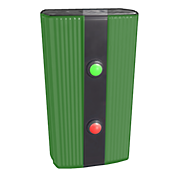
Memory Cell
Stores an electrical state (SET or RESET) and outputs it until changed. The foundation of toggle and latch circuits — pair with buttons to create flip-flop logic.
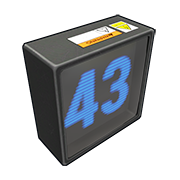
Counter
Counts incoming power pulses and displays the current count on a small screen. Outputs power once the count reaches a configured threshold value.

Blocker
Passes power from POWER IN to POWER OUT only when there is no signal on the BLOCK input. If the BLOCK input receives power, the output is cut off.
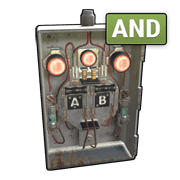
AND Switch
Outputs power only when both of its two inputs are simultaneously receiving power. A fundamental logic gate used to require multiple conditions to be met before triggering an output.
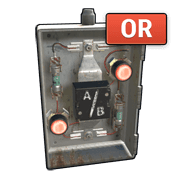
OR Switch
Outputs power when at least one of its two inputs is active. Useful for combining multiple trigger sources — such as two separate motion sensors — into a single output.
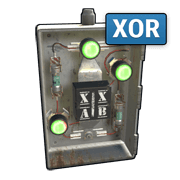
XOR Switch
Outputs power only when exactly one of its two inputs is active — not both, and not neither. Ideal for toggle logic where you want a state to flip based on one condition at a time.
Sensors & Remote Control
Detect events — player movement, door state, RF signals — and trigger electrical outputs.

Motion Sensor
Detects players and animals moving within approximately 10 meters and sends a power signal to connected outputs. Great for automated alarm and defense systems.
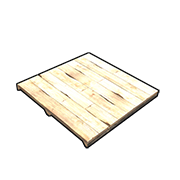
Pressure Pad
A floor-mounted sensor that triggers when any player, NPC, or large animal steps on it. Often used as a trip-wire style alert or to trigger traps.

Door Sensor
Attached to a door, it sends a power signal whenever the door is opened or closed. Useful for triggering alarms or logging base entry events.

Smart Alarm
Sends a push notification to your phone via the Rust+ companion app whenever it receives a power signal. Pair with any sensor to receive real-time base breach alerts.

Smart Switch
A remotely controllable switch that can be toggled on or off through the Rust+ companion app from anywhere in the world. Great for controlling lights and defenses while offline.
Components & Consumers
Connect power to real effects: lights, turrets, doors, CCTV, and SAM sites.

Splitter
Takes a single power input and divides it equally across up to three output lines. Each output receives one third of the input power.

Electrical Branch
Splits a main power line while diverting a configurable fixed amount to a branch output. The remainder passes through on the main line.
Root Combiner
Combines two separate power sources into a single output line, summing their wattages. Allows you to merge solar, wind, and battery power into one unified circuit.
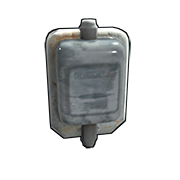
Door Controller
Mounts next to a door and automatically opens or closes it when it receives a power signal. Used to build automated entry systems and keypad-locked doors.
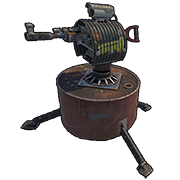
Auto Turret
A powered automated defense turret that detects and fires upon unauthorized players within range. Requires authorization from the TC-linked player list to avoid being targeted.

SAM Site
An anti-air missile battery that automatically targets and destroys helicopters, supply signals, and other airborne objects. A key defense against air-dropped raids and helicopters.
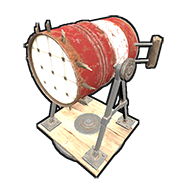
Search Light
A powerful rotating spotlight that automatically tracks and illuminates nearby players in its cone of light. Useful for perimeter surveillance and deterrence at night.
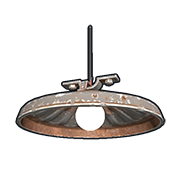
Ceiling Light
A powered overhead light that illuminates a room when switched on. An efficient way to light up your base without consuming Low Grade Fuel.

RF Broadcaster
Transmits a radio frequency (RF) signal on a user-configured frequency when powered. Any RF Receiver set to the same frequency will activate when this broadcaster is on.

RF Receiver
Listens for an RF signal on a configured frequency and passes power to connected outputs when the matching broadcaster is active. Enables wireless electrical circuits.
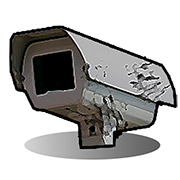
CCTV Camera
A wall-mounted security camera that can be viewed remotely through a Computer Station. Assign it a custom identifier and monitor it from anywhere in your base.
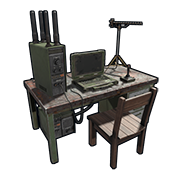
Computer Station
A powered terminal that lets you remotely view feeds from any CCTV Cameras registered to it. Also used to control MLRS systems and monitor other compatible devices.
Frequently Asked Questions
- How much power does a Solar Panel generate in Rust?
- A Solar Panel produces up to 20W at optimal angle (roughly 45° facing the sky). Output varies throughout the day and drops to 0 at night. Most bases use multiple panels combined with batteries to maintain overnight power.
- What is the best power source in Rust?
- The Wind Turbine produces up to 149W and operates 24/7, making it the most efficient passive power source — but it requires high elevation and open space. For compact bases, 3-4 Solar Panels paired with a Large Battery is a reliable alternative.
- How do batteries work in Rust?
- Rechargeable Batteries store power and output it when connected to your circuit. They charge when receiving more power than the circuit consumes. A Large Battery stores enough charge for approximately 500 watts per hour, providing overnight backup for a typical automated base.
- How much power does an Auto Turret use in Rust?
- An Auto Turret consumes 10W of electricity to operate. A single Wind Turbine or 1-2 Solar Panels can power multiple turrets. Remember to also power the CCTV camera if you want remote monitoring. A SAM Site requires 25W.